Inflatable obstacle courses earn their reputation the moment guests arrive. They deliver motion, friendly competition, and a steady current of laughter that photographs beautifully. Still, the smartest event planners know the course is the anchor, not the whole party. Pairing it with the right mix of party equipment rentals rounds out the experience, keeps lines manageable, and covers the practical details that make the day feel effortless.
I’ve set up obstacle courses in church gyms, soccer complexes, school fields, cul-de-sacs, and lakefront backyards. The best events share a pattern: match the course to the crowd, then layer in attractions and support pieces that fit the age range, number of guests, venue constraints, and weather. Do that, and you’ll get the glow of happy parents, relaxed hosts, and kids who sleep soundly that night.
Start with the course, then build the ecosystem
Every inflatable obstacle course has a personality. Some run short and fast, great for younger kids. Others stretch 60 to 100 feet with crawl tunnels, pop-ups, climbing walls, and dual racing lanes that draw a crowd. Before you think about add-ons, take a moment to profile your course.
Two-lane racers pair well with competitive stations like a timed relay area or a scoreboard at the finish. Curvy, compact courses shine when space is tight but you can supplement with vertical attractions that stack excitement without eating square footage. Giant courses with a slide at the end create a natural spectator zone, so plan shade and seating near the exit where parents will gather to cheer.
Once you know the course type and footprint, you can start layering the right partners: bounce houses, slides, toddler zones, refreshment stands, shade structures, audio, and simple games that absorb energy between runs.
Balancing age groups without diluting the fun
Mixed ages are the most common planning puzzle. A 5-year-old will hesitate at an 8-foot climbing wall, while a 12-year-old will blast through the same feature in seconds. The fix is not to water down the main attraction, it’s to add a couple of age-appropriate companions.
For families with toddlers, carve out a designated toddler bounce house rental or a small soft-play corner with foam blocks, mini slides, and soft mats. Keep it close enough that parents can monitor both areas, but separated by at least a few steps so little ones don’t drift into bigger bodies. Set a posted age or height guideline at the toddler zone and stick to shorter 5-minute rotations for fairness.
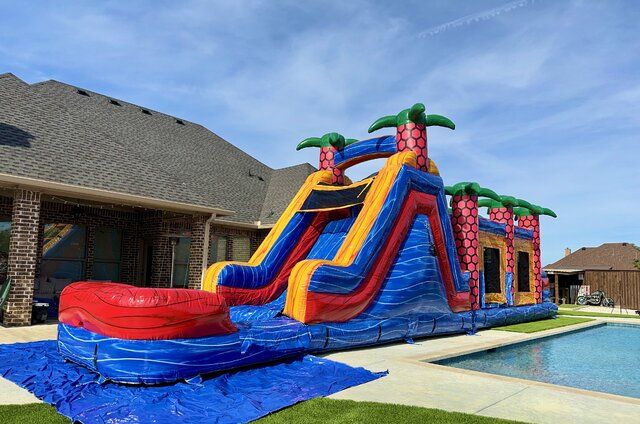
For the middle bracket, think combo bounce house rentals that include a small slide and basketball hoop inside. These “combo” units seem deceptively simple, but they rescue you when the main course line spikes. Kids peel off, burn energy in a contained footprint, then rejoin the obstacle course refreshed. Themed bounce house rentals also shine here. Superhero, jungle, or unicorn designs add an instant visual hook and help you assign zones: “Heroes to the course, unicorns to the combo.”
Teens and preteens respond to speed and stakes. Inflatable slide rentals with steeper grades and dual lanes make natural rivals to the obstacle course. If you can swing it, position an inflatable slide where spectators can watch both attractions without moving. Friendly races happen spontaneously, which boosts overall energy and reduces perceived wait time.
Indoor versus outdoor pairings
A lot depends on where you’re setting up. Indoor bounce house rentals keep you weatherproof, but ceiling height, access doors, and floor protection change your strategy. In a gym or community hall, pair a mid-length obstacle course with two compact attractions that fit the ceiling limit. A small inflatable bounce castle and a low-profile interactive game, like an inflatable axe throw or a sticky soccer dartboard, fill space without risking lights or sprinklers. Use carpet tiles or gym floor covers under entry and exit points, because socks pick up dust that makes vinyl slick.
Outdoors, you have different variables. Grass is forgiving under heavy foot traffic but needs clean staking lines and cable management. Hard surfaces like asphalt require water barrels or concrete anchors and careful heat planning. In both cases, tents unlock smarter layouts. A 20 by 20 tent near the course exit gives parents shade, and it creates a staging area for water, snacks, and a first-aid kit. If your climate runs hot, combine shade with a misting fan pointed at the queue, not the course itself, to keep vinyl dry. Planning for rest zones matters as much as choosing the next big inflatable.
When water slides join the party
Water slide rentals transform an event the moment temperatures climb into the 80s. They also change the logistics. Wet footprints and slippery grass can make an obstacle course entry dicey if you place them too close. Plan a buffer, at least 20 to 30 feet, or use a clear path lined with mats so kids dry off before they sprint to the next attraction. If space is tight, put the water slide downwind, so overspray doesn’t drift onto the dry course.
One of my favorite summer layouts uses a U-shaped flow. The obstacle course sits along one side of the yard, the water slide along the opposite side, and a shaded chill party rentals zone with tables, drinks, and a speaker in between. Kids cycle from dry action to cool-down to wet action without bottlenecks. If you have a pool on site, place the inflatable slide far from it. Crossing streams of wet foot traffic and pool safety rules complicates supervision.
Consider water usage and drainage too. A single-lane water slide can run 3 to 5 gallons per minute depending on the hose splitter and nozzle setting. On a three-hour party, that adds up. If the yard slopes, position the slide so runoff leaves the play area rather than pooling around the obstacle course’s blower extension cords.
Power, spacing, and safety are the hidden backbone
Inflatables are hungry for power. Most full-size inflatable themed kids bounce house obstacle courses need one to two 1.0 to 1.5 horsepower blowers. Pair that with a bounce house rental and a slide, and you can be at four or five blowers quickly. Separate circuits save your day. Run exterior-rated extension cords with GFCI protection and never daisy-chain power strips to stretch your reach. Secure cords with cable covers or sandbags wherever guests cross them.
Spacing is just as vital. Manufacturers list footprint dimensions, but you also need a safety perimeter. I plan at least 5 feet of clearance on each side of a bounce unit and 10 feet at the slide exit. For obstacle courses with a final drop slide, give yourself more breathing room. If you’re tight on space, angle the course so the entry and exit point toward open zones, not fences or driveways.
Staffing and supervision keep the tone upbeat. One dedicated attendant per major inflatable is the gold standard. For backyard events with limited budget, recruit two parents or older teens who can rotate in 30-minute shifts. The attendant’s job is simple and critical: keep the line moving, watch for crowding inside the unit, and enforce the number of participants based on the manufacturer’s chart. If you’re booking through a professional party equipment rentals company, ask about staffing options and training.
Smart pairings that reduce lines and increase smiles
When you only have one main attraction, lines stretch, and the energy drops. The fix isn’t always adding another giant inflatable. Sometimes a small satellite activity does more good.
A compact inflatable slide at a 45-degree angle to the obstacle course catches kids who want a fast reboot between races. A themed bounce house rental near the course entrance gives younger siblings a place to bounce while older kids run the race. Interactive sports inflatables, like a mini quarterback toss or soccer goal challenge, absorb competitive energy without the space demands of another large unit.
Food and games work as pressure valves too. A popcorn cart positioned halfway down the line gives kids a reason to pause and chat, which paradoxically makes the wait feel shorter. Yard games like giant Jenga or cornhole, placed off to the side, invite short bursts of play. Keep them visible from the line so kids can monitor their place.
The role of combo units when you have only one big area
Some venues give you a single clear rectangle and not much else. In those cases, combo bounce house rentals carry more weight. They deliver three experiences in a tight footprint: bouncing, sliding, and a small skill game. Placed just beyond the obstacle course exit, a combo unit becomes the “victory lap” for little siblings and a second option for kids waiting out a crowded heat.
I like to rotate the rules slightly by age. Under eight, send children into the combo unit in pairs for two-minute sessions. Over eight, allow four to five at a time for three-minute sessions. The key is rhythm. Short, predictable turns create the feeling of abundance, even when space is limited.
Themed events and how to match aesthetic with action
Themes add cohesion. They also help you make decisions faster when you’re drowning in options. Pirate party? A nautical-themed combo plus a blue-and-sand color inflatable obstacle course makes sense. You can stage a “plank walk” photo op on a simple plywood board draped with fabric near the entrance. For a jungle theme, pair green and tan party inflatables with leaf-pattern shade sails and rope decor wrapped around the entry poles. Superhero parties shine with bold primary colors and a wireless mic for the announcer who calls out racers by their superhero names.
Themed bounce house rentals are more than decoration. They teach kids where to go. If the birthday kid is unicorn-obsessed, that unit becomes their hub. The obstacle course, even if it doesn’t match perfectly, becomes the “quest,” and kids follow the narrative without any signs.
Helping toddlers feel included without derailing the flow
The toddler equation is simple: give them ownership of a safe space and they will not fight for the big one. Toddler bounce house rentals with low entrances and soft, rounded features belong just far enough from the main attraction to create a mental boundary. Put a small shoe rack and a bubble machine outside the toddler zone to turn it into a destination.
Keep the floor dry, the rules visible, and the schedule steady. Announce a five-minute toddler parade through the obstacle course between age groups if the course design allows it. Some courses have a gentle alternative entry that can be opened for calm, supervised toddler walks. If not, don’t force it. It’s better to keep younger kids enthralled where they succeed than risk a traffic jam inside a large unit.
When to go big, when to go many
A common budgeting mistake is spending nearly everything on one enormous obstacle course, then skimping on support. That can work for short school field days where the goal is throughput and you have a platoon of volunteers. For backyard parties or corporate picnics, a balanced approach wins.
Two mid-sized attractions plus two small satellites often outperform one monster unit. For example, an inflatable obstacle course paired with a dual-lane inflatable slide, plus a small bounce house and a sports toss, spreads the crowd across four points. The line at each stays reasonable, and kids self-sort by mood and energy.
Go big if you want a statement piece for photos and brand recognition, especially at public festivals. In that case, plan for physical line management with stanchions or rope, water stations at both ends, and visible signage that shows wait time estimates. Your second spend should be shade and seating, not another giant inflatable.
Timing and rotation strategies that keep it lively
The best events breathe. If you keep everything open at maximum throughput for three hours, staff and equipment wear down and kids get cranky. Build short resets into your plan. Every 45 minutes, pause the obstacle course for three minutes to check anchors, wipe the entrance, and reset the line. Use those minutes to run a quick raffle or hand out water lap tokens.
For large groups, run waves by age or height. First, younger kids get a 15-minute priority window. Next, older kids race. Then, open play for all. Announce it clearly. Parents appreciate predictability, and kids love the urgency of a timed window.
Weather pivots that save the day
Forecasts change. Have a plan. If wind picks up beyond safe limits for inflatables, you need alternatives. Small lawn games, a music-led dance break, and a craft station are not just filler, they are your weather insurance. If light rain appears, many inflatable obstacle courses can remain open, but slides get slick. Switch to dry attractions, wipe entrances with towels, and shorten sessions. If lightning threatens, shut down and move indoors. It’s non-negotiable.
Heat requires more than water cups. Vinyl absorbs sun. A simple white pop-up tent over the queue line reduces complaints by half. Rotate in a cool-down game under shade, like a ring toss, and bring a cooler of ice towels for attendants. For cold-weather indoor events, manage sock grip. Fresh, non-slip socks for sale at the entrance solve more slips than any sign ever will.
Rentals that make your life easier behind the scenes
The showy stuff gets attention, but quiet rentals are the unsung heroes. Generators with proper wattage let you place units exactly where they fit best, not only where outlets live. Portable restrooms matter if your guest count surpasses indoor capacity. A handwashing station near the food table cuts sticky fingers on vinyl. A simple PA or portable speaker and a mic let you run announcements and lighthearted races without shouting.
Cooling or heating equipment can be worth the price on extreme days. Misting fans paired with shade tents help you hold a summer crowd longer. In cooler months, a couple of safe outdoor heaters near the seating area keep adults comfortable without affecting inflatables.
Working with your rental company as a true partner
Good rental companies act like co-planners. Share guest count ranges, age distribution, venue photos, and your event schedule. Ask about setup times and whether they pad the clock for inspections. Clarify who handles power, hoses for water slide rentals, and overnight policies if you need morning access for a noon party.
If you’re considering indoor bounce house rentals, provide ceiling height and door width in inches, not guesses. Most companies can recommend exact units that fit, and they’ll appreciate precise details. Ask for the equipment’s participant capacity chart and post it on site. It gives attendants authority without conflict.
Sample layouts that consistently work
Here are two compact pairings that have worked across dozens of events. Treat them as templates you can adapt, not rigid formulas.
- Backyard birthday with mixed ages, about 25 kids: A 35 to 45-foot inflatable obstacle course set along the fence line. A themed bounce house rental on the opposite side, angled toward the yard center. A small sports toss game near the patio. One 10 by 20 tent with tables and a hydration station between the two inflatables. Music aimed down the center to tie the zones together. Summer block party, 60 to 80 kids rotating in waves: A dual-lane inflatable obstacle course as the anchor. A tall inflatable slide rental perpendicular to it, creating an L-shape. A toddler bounce house rental under a tent at the open end of the L for parents of little ones. Two yard games under shade near the food trucks. Power handled by two quiet generators, one per attraction cluster.
Cleaning, sanitation, and little touches guests notice
Parents notice clean vinyl and clear rules. Ask your provider about cleaning protocols. Most reputable companies sanitize after each event and touch up on site. Keep a small cleaning kit nearby: disinfectant wipes safe for vinyl, a towel for damp surfaces, and a broom for grass clippings that track into entries.
Shoes off, always. Provide a small bench and an inexpensive shoe rack with labeled bins by size or color. It’s small, but it changes the tone from chaos to care. A bowl of bandages near the exit, a sunscreen pump at the check-in table, and a printed schedule at eye level help the day run smoothly.
Budget levers that don’t cheap out the experience
If the numbers feel tight, trim where it doesn’t hurt throughput or safety. Choose one strong inflatable obstacle course and one companion unit, then add low-cost enhancers like a Bluetooth speaker, yard games you already own, and DIY decor that reinforces the theme. Shorten the rental window if your crowd peaks within two hours, but ask about grace periods for setup and teardown.
Book early. Many kids party rentals companies offer off-peak pricing for weekdays or mornings. If your group is flexible, a Sunday afternoon slot can run 10 to 20 percent less than a Saturday prime slot depending on your market. Bundles that include delivery, setup, and a generator can save money compared to piecing items together.
Common pitfalls and how to avoid them
Crowding the inflatables too closely invites collisions and tangles power cords. Measure twice, stage once. Ignoring supervision leads to line jumping and rough play. Assign attendants with clear shifts. Forgetting shade and water shortens your event by an hour because kids melt down. Plan those first.
Another frequent miss is underestimating your surface. Sloped yards are manageable if you orient the obstacle course along the contour rather than uphill. Uneven fields can be shimmed with mats at entries to reduce ankle tweaks. If you’re on pavement, ask for ground tarps large enough to cover beyond the unit footprint. They protect vinyl and knees.
Bringing it all together
Pairing inflatable obstacle courses with the right mix of party inflatables and support rentals is less about buying more and more about shaping flow. The obstacle course anchors attention. A bounce house or combo unit gives kids a parallel track. A slide amplifies thrills for older kids. Toddler options keep the littlest guests delighted and safe. Shade, seating, music, and simple games stitch the experience together.
When you ask the right questions early, the rest falls into place. Who is coming, how many at peak, what space is truly usable, and what weather is probable? With those answers, your choices become obvious. Book thoughtfully, measure with care, and treat supervision and comfort as part of the fun. The result is an event that looks great in photos and feels even better in the moment.
And if you’re scanning options now, keep your shortlist grounded: inflatable obstacle courses that fit your space, a complementary bounce house rental or two, water slide rentals if heat demands it, and a few quiet heroes from the party equipment rentals catalog. Done well, your guests will talk about the laughter and the races, not the logistics you handled behind the scenes.